
CashCow - Play & Earn Money
CashCow Play & EarnLifestyle
4.33.81K Reviews
- Version
- 1.86.0
- Installs
- 500.00K
- Age Rating
- Mature 17+
Screenshots

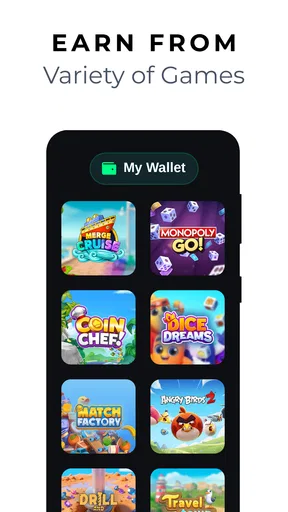
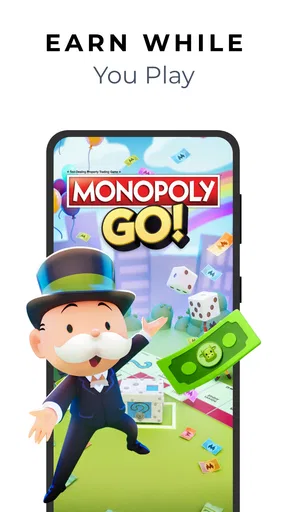
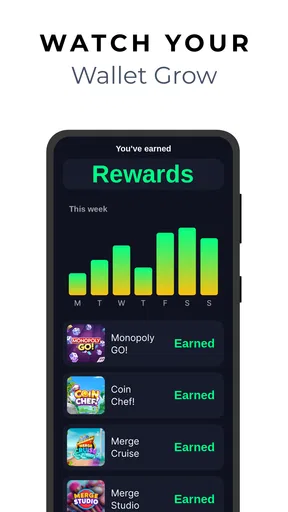
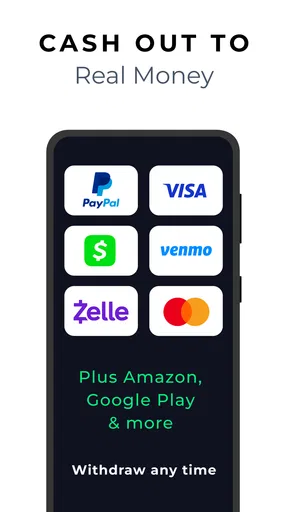
Our Review of CashCow - Play & Earn Money
 Analysis by Appyee
I approached CashCow - Play & Earn Money as a practical lifestyle app rather than as a conventional game. Its central idea is simple: everyday activity can be connected with earning opportunities, so spare moments, travel time, and casual phone use may feel a little more productive. That makes it interesting for people who already spend time on their phones and want a reward-oriented experience, but it also means expectations matter. This is not an app I would judge like a full entertainment game or a traditional budgeting tool.
My first question was whether it could fit naturally into an ordinary routine. The answer depends on how you use it. If you want a light, low-commitment way to explore earning-related tasks, the concept is appealing. If you expect a dependable income stream, it is the wrong category entirely. The developer, CashCow Play & Earn, places the app in Lifestyle, and that description makes sense: it sits somewhere between casual engagement, mobile rewards, and a daily habit.
How I would decide whether CashCow is worth using
I would begin with the amount of attention I am willing to give it. Reward apps often look attractive because they promise value for activities users already perform, but the real trade-off is usually time, focus, and patience. Before installing, I would ask whether I want something to check occasionally during a commute or whether I am searching for a serious financial tool. CashCow is much better suited to the first situation.
The app is free, which lowers the barrier to trying it. It is available for devices running Android 7.0 or later, and its current version is 1.58.2. Those details make it accessible to many Android users, although the mature 17+ content rating is an important part of the decision. I would not treat the age label as a minor footnote, especially if the phone is shared with younger family members.
I also look at trust signals without confusing them with a guarantee of personal results. CashCow has an average rating of 4.1 from around 14 thousand ratings, with roughly 3.1 thousand written reviews, and it has passed the half-million-install mark. That level of use suggests the app has attracted a meaningful audience, but it does not tell me whether every user will find the earning process worthwhile. Rewards apps can be highly dependent on location, available activities, consistency, and individual tolerance for repetition.
The right mindset for the earning model
The most useful way to think about this app is as a bonus layer on top of phone time, not as a replacement for work. I would never rearrange a budget around expected proceeds from it. Instead, I would decide in advance how often I want to open it and how much time I am comfortable giving it. That simple boundary prevents the common mistake of turning a supposedly casual app into an obligation.
There is also a difference between being curious about an earning app and being motivated by a specific financial goal. Someone trying to cover a bill needs predictability, transparent terms, and strong control over withdrawals. Someone who simply enjoys checking progress and seeing whether small rewards accumulate can be more flexible. CashCow makes more sense for the second user.
My practical test would be short and controlled. I would install it, review the onboarding and available earning paths, then see whether the actions feel understandable and proportionate to the reward progress. I would avoid spending money, sharing unnecessary personal information, or committing to repeated tasks before I understood the basic flow. If the app feels clear and unobtrusive, it may earn a place in a daily routine. If it creates confusion immediately, no promise of casual earnings is likely to compensate.
Where it fits into a normal day
A realistic use case is a regular commute. Rather than opening social media automatically while waiting for a bus or train, I might check CashCow and see whether there is a suitable activity to complete. The key benefit is not that the commute suddenly becomes a job; it is that an otherwise idle moment can be given a small purpose. I would still keep the session brief and avoid using the phone in a way that makes travel less safe or less comfortable.
Another use case is a quiet break between errands. I could open the app, review what is available, complete only the activities that make sense, and close it. This “selective session” approach is better than tapping through everything blindly. It helps protect time and makes it easier to judge whether the reward is genuinely worth the attention.
A third use case is habit tracking for people who enjoy small progress markers. The attraction may come from returning regularly, seeing activity build, and deciding when a cash-out makes sense. That can be satisfying, but it is also where discipline matters. If checking the app becomes compulsive, the reward purpose has been reversed.
Where CashCow stands out from ordinary alternatives
CashCow’s strongest point is its attempt to connect earning with situations that already exist in daily life. The store summary presents commuting as one example, and that framing is more approachable than asking users to treat the phone as a dedicated financial workspace. I like the idea because it lowers the psychological effort: instead of creating a separate project, the user can explore whether routine downtime has any useful reward potential.
Compared with a standard lifestyle app, it offers a more tangible reason to return. A habit tracker might help me record behavior, while a planning app might organize tasks, but neither is built around cashing out. Compared with a conventional game, CashCow is less about mastering a fictional world and more about the motivation of earning. That distinction matters because users who want deep gameplay may find the experience too functional, while users who dislike games may appreciate the lighter approach.
I also see value in the app as a low-risk experiment. Since it is free, I can evaluate the experience without paying an entry fee. The sensible workflow is to learn the interface first, identify which activities are relevant, and then decide whether the effort feels fair. That is more useful than assuming every available action deserves attention.
Three practical habits that improve the experience
My first tip is to treat the app like a queue, not a feed. I would check it at a planned moment, such as after arriving somewhere, instead of opening it repeatedly throughout the day. This reduces distraction and gives me a clearer sense of how much time the app actually consumes.
My second tip is to separate “interesting” from “worth doing.” An activity can look entertaining or easy while still not fitting my schedule. I would prioritize tasks that require little concentration during idle time and avoid anything that interferes with work, travel awareness, or personal plans. This is a small distinction, but it stops the reward system from controlling the routine.
My third tip is to keep a personal record of effort and results during the trial period. I do not need a complicated spreadsheet; a few notes about session length, what I completed, and how the balance changed can reveal whether the app works for me. This is especially helpful because a headline reward can feel appealing until the repeated actions are considered.
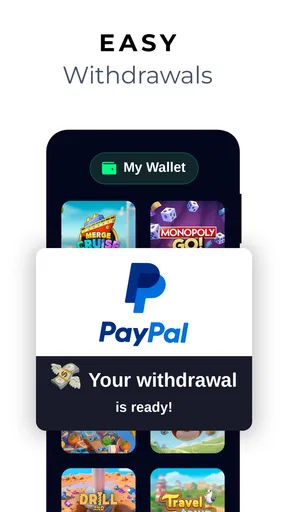
A fourth useful habit is to review the cash-out path before investing serious time. I would make sure I understand the steps shown inside the app, any eligibility requirements presented there, and whether the process feels straightforward. The important point is timing: I would inspect the withdrawal experience early rather than discovering friction after building a large balance.
What may frustrate regular users
The biggest limitation is built into the category. Earning through a mobile app usually means exchanging attention for small opportunities, and the return may not feel impressive if the user expects a conventional wage. Even when the process is easy, repetition can make it feel less rewarding over time. I would be cautious about judging the app only by its most attractive activity; the everyday experience is shaped by what is actually available when I open it.
There is also a risk of distraction. An app designed to make spare time productive can quietly encourage more screen time. The commute example works only when the user remains in control. If I find myself opening the app whenever I am bored, chasing progress instead of relaxing, I would consider that a sign to reduce usage.
The mature rating creates another boundary. I would not recommend casually handing the app to a teenager simply because the interface looks approachable. Parents and guardians should pay attention to the age classification and decide whether it belongs on a child’s device. That is a basic safety decision, not a criticism of the earning concept itself.
Finally, the app may not satisfy people who need detailed financial records. A dedicated personal finance app is better for budgets, recurring expenses, savings goals, and income planning. CashCow can complement that kind of tool if the user wants to track occasional rewards, but it should not replace a proper financial system.
When another category is the better choice
If my main goal were entertainment, I would choose a regular mobile game. A traditional game is designed around progression, challenge, story, or competition, whereas CashCow’s appeal comes from the possibility of earning through engagement. The two experiences can overlap, but they satisfy different motivations. Someone who wants rich gameplay should not install this expecting the depth of a dedicated game.
If my goal were saving money, I would choose a budgeting or expense-tracking app. Those tools help me understand where money goes and make deliberate decisions. CashCow may make idle time feel more useful, but it cannot substitute for a clear view of income and spending.
If my goal were reliable extra income, I would look beyond the rewards-app category altogether. A freelance platform, part-time role, or task marketplace may require more effort, but those options are evaluated through work, rates, and commitments rather than casual mobile activity. CashCow is better viewed as an optional side experience, not a dependable earning plan.
If I disliked advertising-style engagement, repeated prompts, or checking balances, I would probably skip it. The app’s entire appeal depends on being comfortable with a reward loop. There is no reason to force myself into that pattern when a simple relaxation app or a podcast would serve my downtime better.
The real cost of switching from another app
Moving from a normal game to CashCow is not difficult technically, but it does require a change in expectations. I would no longer measure success only by fun or progress in a fictional system. I would also judge whether the time spent feels justified by the reward experience. That can make the app feel more purposeful, but it can also remove some of the carefree quality people enjoy in games.
Switching from a budgeting app is a larger conceptual change. CashCow does not belong in the same mental folder as bills, savings, or financial planning. I would keep both categories separate: one for understanding money, the other for exploring optional rewards. Mixing them could lead to unrealistic assumptions about how much the app contributes to a household budget.
Switching from another rewards service may be easier, but I would still avoid migrating purely because of a promising summary. The better test is whether the available activities suit my actual routine and whether the cash-out flow feels convenient. A service that fits my commute may be less useful for someone who rarely travels or prefers not to use a phone during breaks.
There is also a small organizational cost. Any rewards app becomes more manageable when I remember why I installed it, what information I shared, and how often I want to check it. I would keep notifications under control and avoid letting the app dictate my schedule. If I cannot maintain those boundaries, switching away is probably the smarter choice.
My recommendation after weighing the trade-offs
I recommend CashCow to adults who want to experiment with a free lifestyle app that connects casual phone use with earning opportunities. It is particularly suitable for someone with regular idle moments, a patient attitude, and realistic expectations. The commute-oriented idea gives it a clear everyday use case, and the established audience suggests it is not an obscure experiment with no user interest.
I would recommend starting slowly rather than trying to maximize every possible activity. Learn the interface, observe how the reward process fits your routine, and check the cash-out steps before giving it much time. The best experience is likely to come from treating it as an optional habit that can be dropped whenever it stops feeling worthwhile.
I would not recommend it as a replacement for employment, a budgeting system, or a serious income strategy. I would also steer away from it if I wanted a deep game, disliked reward loops, or needed highly predictable financial results. In those situations, a conventional game, finance app, or work platform would be a better match.
Overall, I see CashCow as a modest, clearly defined experiment: it gives idle mobile time an earning angle, but the user still has to decide whether the exchange is fair. Its free entry makes that decision easier, while the mature rating and reward-focused design mean it deserves deliberate use. The smartest way to use it is to measure the value of your attention, not just the promise of a cash-out.
For me, that makes it worth trying under controlled conditions, especially during unavoidable downtime. I would keep it only if the activities remain simple, the progress feels understandable, and the experience adds something without taking over the day. Used with that level of restraint, it can be a useful little addition to a lifestyle-app collection rather than an unrealistic shortcut to making money.
Privacy and Permissions
See what permissions an app requests and how it handles your data.
- Photos/Media/Files
- read the contents of your USB storage
- Storage
- read the contents of your USB storage
- Camera
- take pictures and videos
- Wi-Fi connection information
- view Wi-Fi connections
- Other
- view network connections, full network access, control vibration, prevent device from sleeping, Google Play license check, read Google service configuration
Verdict
Strengths of CashCow - Play & Earn Money
- Simple games make it easy to start earning rewards.
- Multiple game options help keep the experience varied.
- The interface is generally easy to navigate for new users.
- Progress tracking makes it clear how close you are to rewards.
- Suitable for short play sessions during spare time.
Limitations of CashCow - Play & Earn Money
- Earnings per game can be small and require significant time.
- Reward availability may vary by country or region.
- Cash-out requirements can delay access to your rewards.
- Ads may appear frequently during gameplay.
- Some offers may require extra permissions or account details.
Similar Picks in This Category
View All
SmartThings
Samsung Electronics Co., Ltd.4.6

Google Home
Google LLC4.0

Pinterest4.2

Astrotalk - Talk to Astrologer
Astrology & Horoscope4.7

My Verizon
Verizon Consumer Group4.5

Samsung Wallet (Samsung Pay)
Samsung Electronics Co., Ltd.4.1
Frequently Asked Questions
What is CashCow - Play & Earn Money, and how does it work?
CashCow - Play & Earn Money is a rewards application that lets users earn points or virtual currency by completing activities such as playing selected games, reaching in-game milestones, answering surveys, or viewing promotional content. After collecting enough rewards, users may be able to exchange them for available payout options. The exact tasks, rates, and redemption choices can vary by country and may change over time.
Can I really make money with CashCow, and how much can I earn?
CashCow may provide small rewards for completing eligible activities, but it should not be considered a reliable source of full-time income. Earnings generally depend on the number of tasks available, your location, the time required, and whether you successfully meet each offer’s conditions. Before investing significant time, review the reward values, completion requirements, and user feedback, because advertised earnings may not represent typical results.
How do withdrawals work, and what is the minimum payout?
Withdrawal methods and minimum redemption amounts can differ depending on your region, account status, and the offers currently supported by the app. Common reward services may include gift cards, digital payment platforms, or other options, but availability should be checked directly inside CashCow before completing tasks. Read the payout instructions carefully, verify your account details, and remember that processing times may vary.
Is CashCow safe to use, and what personal information does it require?
As with any rewards app, you should review CashCow’s privacy policy, permissions, and terms before creating an account. The app may request information needed for registration, reward tracking, fraud prevention, or payment processing. Avoid providing unnecessary sensitive details, never share passwords or verification codes, and install the application only from an official store. Also check whether third-party offers redirect you to external websites.
Why might my rewards be delayed, rejected, or not credited?
Rewards may fail to appear when an offer is not completed exactly as required, tracking is interrupted, an activity was previously started, ad-blocking or privacy settings interfere, or the provider detects duplicate or suspicious activity. Some tasks also require a waiting period before crediting. Keep screenshots and offer details, avoid using multiple accounts or VPNs, and contact CashCow support through the official in-app channel if a valid reward remains missing.
